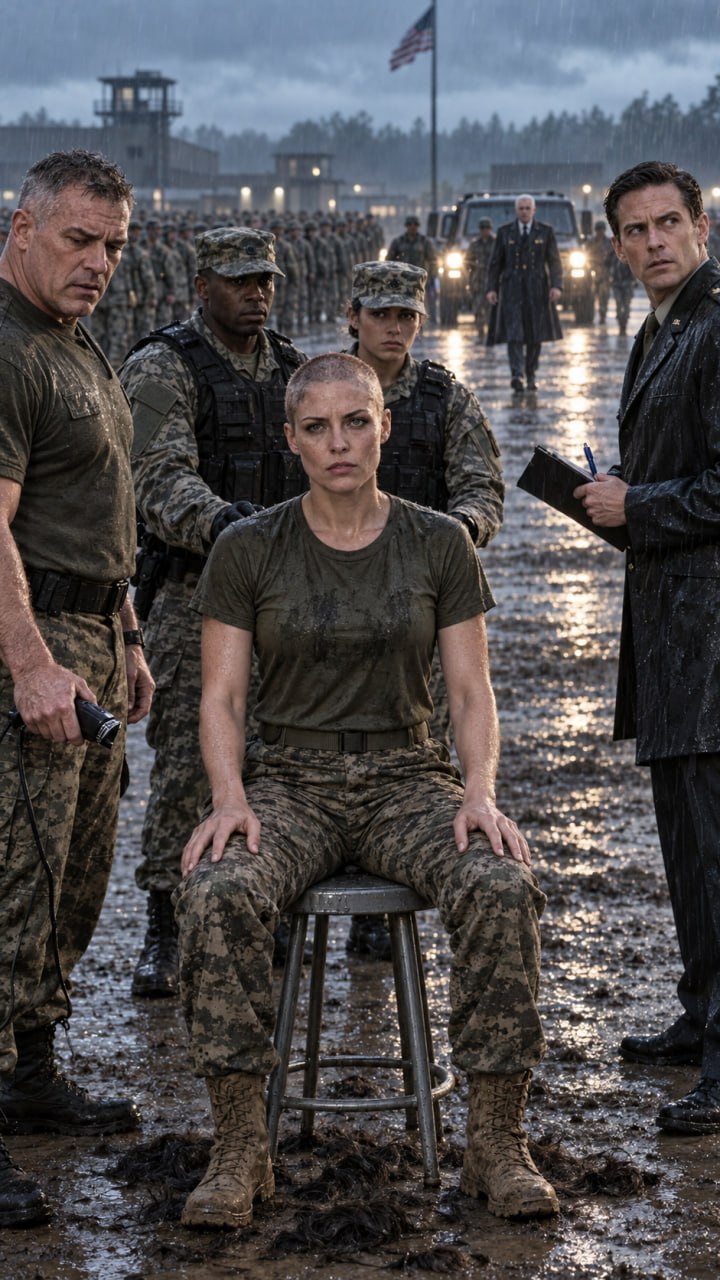
Knox waited until afternoon formation to produce the letter.
He held it above his head while three hundred recruits stood beneath a white, windless sky. The envelope was cream-colored, its corner creased from travel. My name appeared across the front in Mara Velez’s slanted handwriting.
For one careless second, I forgot Blackridge.
I saw Daniel Velez on a cargo ramp six years earlier, one arm hooked around my shoulders while I carried most of his weight. Rain had struck the aircraft sideways that night, and the field behind us had burned without appearing on any public map. Daniel had been conscious long enough to complain about the coffee waiting at the hospital. His sister’s first letter reached me four months later. She never mentioned the operation. She wrote about physical therapy, stubborn doctors, and the day Daniel crossed his kitchen without a cane.
Those letters were permitted because they revealed nothing classified. They mattered because they proved that a man erased from an official mission had returned to an ordinary life.
Knox turned the envelope between his fingers. “Maybe Mommy finally wrote to tell you how proud she is.”
A few recruits laughed. Most waited to see what I would do.
The mail clerk stood near the administration steps with her distribution bag still open. She was a young corporal named Ruiz, dark curls tucked beneath her cap. Her face had tightened when Knox removed the letter from the stack. She knew regulations well enough to understand that personal mail did not belong to him.
“Chief,” I said, “that is addressed to me.”
His eyebrows rose. “So the ghost can read.”
Crowley watched from beside the flagpole. The clipboard rested against his forearm, blue pen ready.
Knox took a lighter from his pocket.
The click carried farther than it should have.
Ruiz shifted one step forward. Crowley looked at her, and she stopped.
Knox held the flame to the lower corner of the envelope. Paper darkened, curled, and caught. He kept it pinched between two fingers while the fire climbed through Mara’s handwriting.
The laughter thinned.
I could have crossed the distance before the flame reached the fold. I could have taken the letter from him and exposed far more than the act deserved. Instead, I watched his hand, the lighter, the recruits nearest him, Ruiz by the steps, and Crowley recording the event as if he were documenting weather.
The envelope folded inward. Knox let it fall.
Charred flakes struck the pavement between us. A breeze moved across the parade deck for the first time that afternoon and lifted the lightest piece.
I stepped forward and covered the ash with my boot.
Knox smiled. “Sentimental?”
I looked at him. The last sentence I remembered from Mara’s previous letter had been about Daniel burning another pot of coffee because he refused to use a timer. The image stayed intact. Knox had destroyed paper, not memory.
“Preventing litter, Chief.”
His smile became harder.
Behind me, someone breathed out through their nose—not laughter, something closer to disbelief. I did not turn to identify them.
Crowley made a mark on the clipboard. “Recruit Cross demonstrates continued difficulty accepting corrective action.”
“Yes, sir,” I said.
The blue pen paused. Crowley wanted argument almost as much as Knox did. A denial could become insubordination. Grief could become instability. Even the request to receive my own mail could be rewritten as resistance to command authority.
Ruiz stared at the lighter still resting in Knox’s palm. Then she looked at me. Her expression carried an apology she could not safely speak.
Jensen stood in the front rank. His lips moved without sound as he counted the seconds from ignition to ash. I had seen him use the habit during timed drills. Now he was fixing the event inside memory: time, duration, position, witnesses.
Knox ordered the formation dismissed.
Recruits moved around me in two streams, careful not to step where my boot covered the remains. No one spoke. That silence was different from the silence in the mess hall. It did not exclude me. It protected something.
When the deck had nearly emptied, I lifted my boot. Only a black crescent remained pressed into the damp concrete.
Ruiz passed close enough to speak without moving her head. “It came through registered channels. I logged it at 1342.”
“Keep your log,” I said.
Her pace did not change, but her shoulders squared.
Crowley called my name from the flagpole. When I looked back, he was holding the clipboard against his chest.
“Something you’d like to report?” he asked.
The question was a trap polished by repetition. He knew any complaint I gave him could disappear into the same office as the others.
“No, sir.”
I stepped on the remaining ash once more before the wind could scatter it, then walked toward the barracks.
Behind me, Knox laughed alone.
Comments (0)