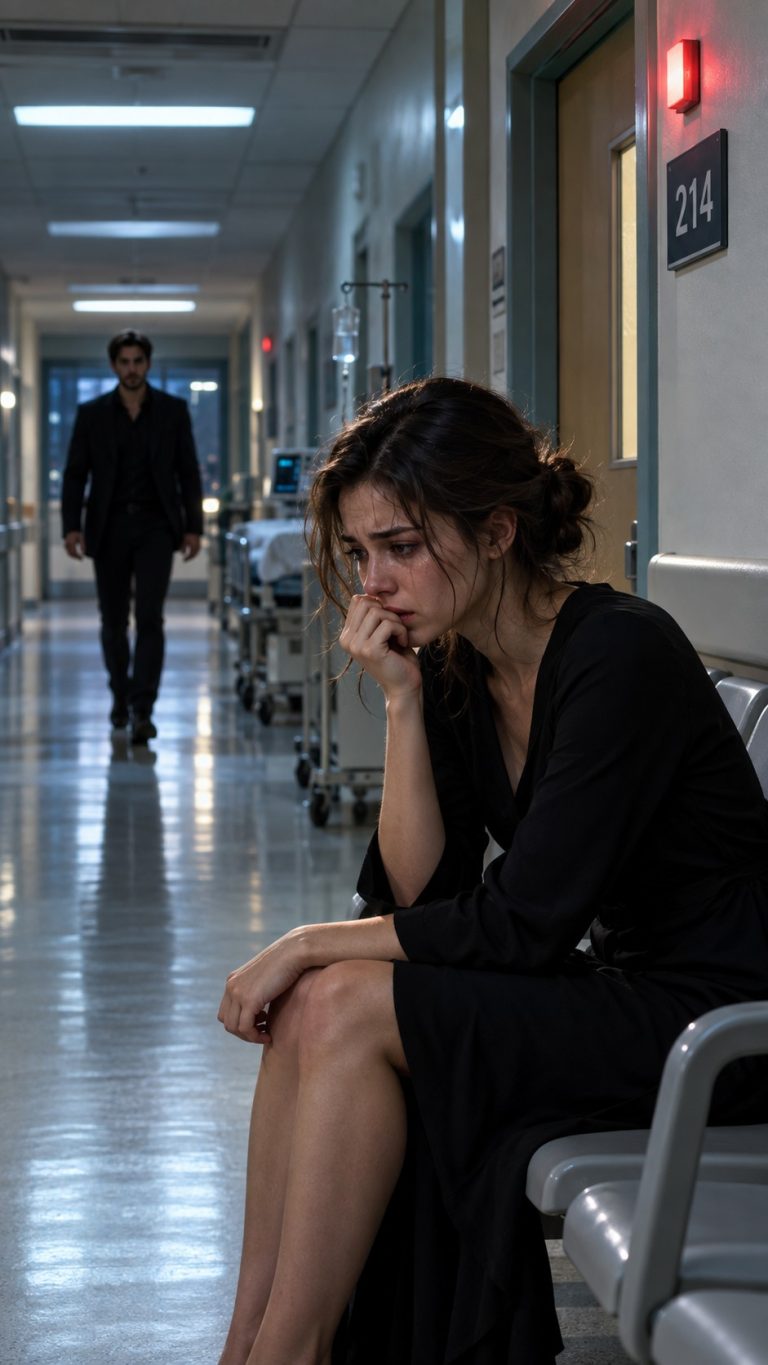
The mistake happened on a Tuesday, three days before the wedding, in a small ceremony at a Logan Square bookstore that Elena had shot three times before without incident. She was perched behind her camera, lens set to a wide aperture for the exchange of rings, when the officiant leaned forward and the light shifted. For one second — one second — her focus pulled to the left, toward the windows where late afternoon was sinking into gold, and when it snapped back the bride’s face had gone dark.
She saw it on the LCD review immediately. The bride’s features, which should have been the brightest thing in the frame, were submerged in shadow. A wedding photographer’s worst mistake is not a blurry image or a missed angle. It is an image that erases the person the wedding is about.
Elena cursed under her breath, something short and sharp, and moved to recompose. She shot the rest of the ceremony handheld, bouncing the flash aggressively, overexposing the reception shots by a stop to compensate. She told herself she could fix it in post. She told herself this three times in the car on the way home and twice more while unpacking her gear on the kitchen counter.
It did not actually get fixed until 11:47 PM, when she sat alone in her editing suite with the raw file pulled up on a secondary monitor, the exposure slider moving back and forth like a metronome, trying to find the line between salvage and ruin. When she finally emailed the client a selection of edited images at midnight, she had added a note she would usually never write: There was a lighting issue during the ring exchange — I’ve done my best to recover the image below.
The client replied within ten minutes: These are beautiful, Elena. Thank you for staying late.
She read the message twice and felt, with a strangeness that she could not name, like someone who had just been forgiven for something she hadn’t meant to do.
Sofia was on the couch when Elena came in, one of the dining chairs pushed onto the coffee table, both of them already half-dressed in takeout containers and a movie that neither of them had chosen. They had been doing this for two years — Thursday night Chinese, some film Elena had seen or wanted to see, the easy choreography of a relationship that no longer needed to prove itself.
“Hey,” Sofia said, without looking away from the screen. “You’re late.”
“The client needed something,” Elena said, dropping her bag by the door. “The bookstore shoot ran over.”
“You’re working on a Thursday?”
“It’s a Thursday wedding. I finished the edits.”
Sofia finally turned. She had a piece of lo mein hanging from her hand. “You look tired.”
“I’m fine.”
“You’re standing like you’re waiting for something to fall.”
Elena looked down at her own feet, then back up. She had not noticed she was doing it. “Wedding-week stress. The Caldwell wedding is almost here.”
Sofia’s expression did not change, but something in her face settled, the way it did when she was filing away an answer she had already been given. “Right. The wedding.”
Elena could not tell whether Sofia’s response was deliberate — a question held up for inspection, or a subject quietly closed. Elena had learned, over two years, that Sofia was good at the second one. It usually meant she had decided the first conversation wasn’t worth pushing.
They ate on the couch. The movie was a comedy Elena had picked, something light, and halfway through she realized she had eaten almost nothing and was watching the screen without seeing it, her attention folded somewhere else. Sofia noticed. She always noticed.
Sofia reached over and found Elena’s hand on the cushion between them, an automatic gesture, the kind that had become as routine as breathing. Elena’s hand was already there — she had not moved it — but when Sofia’s fingers closed around it, Elena pulled away.
Not hard. Not even deliberately. Just a fraction of an inch, a reflexive withdrawal, the way you step back from a stove that might be hot before you know whether it is.
Sofia’s hand stayed where it was, open, hovering in the space Elena had vacated. Then she let it fall back to her lap.
“Everything okay?” Sofia asked.
“Yeah. Just cold.”
The apartment was seventy-two degrees.
Sofia did not say anything else. She turned back to the screen, and the movie went on, and Elena stared at the developing particles of light on the ceiling — the reflection of the TV, a watery orange shape that had nothing to do with what she was thinking about.
She thought about Marcus at the meeting, standing to open the door for her, holding her coat like it mattered. She thought about Victoria’s line — Some things are better when they are handled professionally — and the way it had sat in the room afterward, clean and final. She thought about the drawer in her darkroom, the one with the photograph inside, the one she had not opened in six months and would not open now.
Sofia’s knee pressed against hers under the blanket. Elena did not move toward it. She let it stay there, an unclaimed thing, while the movie reached its ending and the credits rolled and neither of them turned it off because turning it off felt like admitting the evening was over.
She woke at 3:02 AM.
Not to an alarm. To herself, sitting up in bed with the sheet clenched in her hands, her heart doing something that felt like anticipation and panic in the same motion. The room was dark. The city outside her window was the color of deep water.
The wedding was three days away.
Elena got up. She did not turn on the bedroom light. She let her eyes adjust to the hallway — the narrow strip of illumination from the kitchen clock, the familiar shapes of her bookshelf, the coat rack with Sofia’s raincoat still on it from the previous evening, the thing she had forgotten to hang properly. She was barefoot. The floorboards were cold.
She went downstairs.
Her darkroom was in the basement, a converted storage space she had built out herself over six months one winter when her business had taken off and her existing studio could no longer hold the volume. It was a good darkroom. It was clean, well-ventilated, organized — the place where her work got made, the place where the raw image became something you could hold. She had spent more nights there than she could count. She knew the sound of the ventilation fan. She knew the exact temperature of the water when it came out of the tap. She knew the smell of the chemistry — sharp, metallic, almost sweet, the smell of things being revealed.
The red safe light was on. She had left it on.
She stood in the center of the room and did not move.
This was not ritual. This was not a plan. She had no film loaded. There was nothing to develop. She was a photographer who had come to her workspace at three in the morning for no reason she could articulate, and the red light washed over her in a color that made everything look like a period at the end of a sentence.
She stood there for an hour.
The fan hummed. The clock on the wall ticked. Somewhere in the building, a pipe knocked once and went quiet. Elena did not develop anything. She did not open the drawer. She did not reach for the photograph that was waiting for her in the dark, the one from twelve years ago, the one that showed her and Marcus at a rehearsal dinner, both of them smiling in a way that looked, in hindsight, like they were trying very hard not to know something.
She stood in the red light until her feet were completely cold and her chest began to ache with the shape of something she could not name, and then, eventually, she turned off the safe light and went back upstairs.
She did not sleep again that night.
By morning, she had decided she could handle it. She told herself this while she made coffee, while she answered three client emails, while she watched Sofia get dressed in the kitchen and did not say anything about the night. She told herself it the way she told herself everything — as a fact that, if repeated often enough, might become true.
But when she left for work that morning, she caught her reflection in the front door’s glass and saw, for the first time, someone who looked like she was already halfway out the door.
Comments (0)