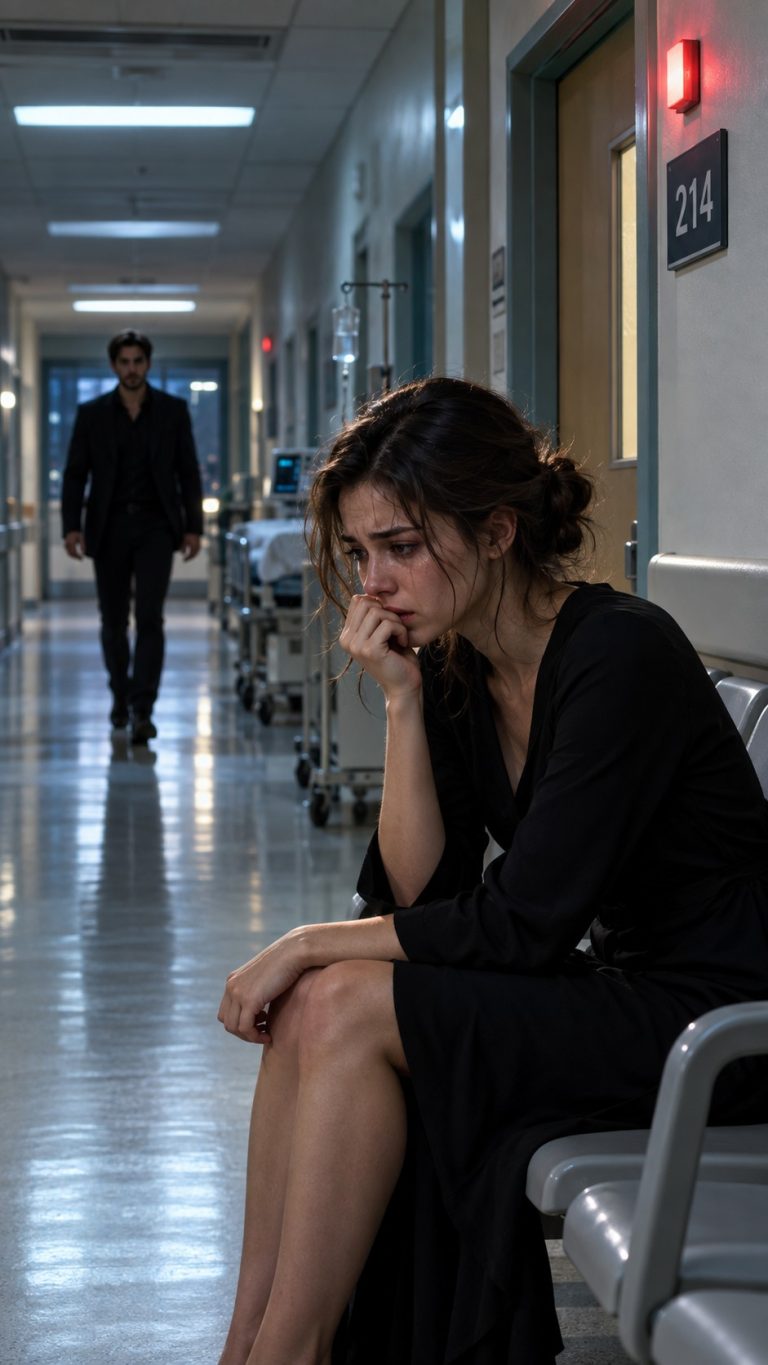
The Evanston couple wanted a straightforward ceremony and an outdoor reception. Elena had already handled the difficult mother-in-law by telling her she couldn’t be in two places at once. The photos needed to go out by Tuesday. It was Saturday night, and she’d spent the day invoicing, returning rentals, and pretending she wasn’t staring at the deposit confirmation that had landed in her inbox at noon. She checked email twice: once when it arrived, once after dinner while washing dishes, letting her soapy hands pretend they had another reason to be busy.
The darkroom door clicked shut. The small space sealed into the only quiet she had left. She’d left the safelight on. The amber glow turned everything the color of old whiskey. She dropped the negatives into the contact printer, aligned the frames, and switched on the enlarger. The beam hit the paper. She set the timer. Ninety seconds.
The first print was a bride adjusting her veil. The second was a groom slipping his hand into his father’s. The third was laughing. Elena moved through the sequence with the automatic precision of someone who had done this ten thousand times. Developer. Rock the tray. Watch it appear. Stop bath. Fixer. She knew the chemistry by muscle memory, knew exactly when the shadows would hit their deepest black.
Her mind went elsewhere. It went to a kitchen table in Oak Park, twelve years ago, with a paper map spread across it and a cat sleeping on a dish towel. It went to Marcus leaning against the counter, watching her trace routes with a pencil, asking if she really thought they could make a life in Burlington. It went to what she had said—something competent, something about distance and jobs. It did not go to the thing she had meant to say: that she had found the bank statements a week earlier, that her father’s name was on transfers she couldn’t explain, that the money was going somewhere she didn’t want to know about, and that she had spent four days in her childhood bedroom deciding the only person she could still trust not to ask questions was herself.
She had never said any of that to him. She packed a bag in the middle of the night and left a note that said she couldn’t do it. She did not say why. She did not say goodbye.
The timer beeped. Elena pulled the print from the developer and held it by the corner. The image built slowly in the amber light. She shook the excess chemistry and set it in the rinse tray. This was the part she loved: the moment after the image had declared itself but before it hardened into permanence.
She stood at the sink while her mind went back to the conversation she kept revising. She remembered Marcus’s face when he found out—not angry, exactly. Confused. The kind of confused that is worse than anger because it has no target.
On the worktable, among lens caps and a half-empty box of photo paper, lay something she hadn’t meant to bring out. A single print, old, separated from its backing board, curling at the edges. She hadn’t picked it up. She knew that—she had checked—but somehow it was here now, as if it had walked out of the drawer and decided to sit in on the work.
Elena turned to it. Marcus at the head of the dining table. Both hands around a wine glass. Laughing at something she had said. Elena herself in the frame, smaller, slightly out of focus, head thrown back, caught in a laugh she remembered differently now. Then it had been the last good moment before everything broke. Now it was the last good moment before she chose silence over truth, and spent twelve years building a career on the things she could capture because she couldn’t face the one thing she couldn’t.
She picked up the print. It was heavier than she expected. Not physically, but heavier in the way certain objects acquire weight over time. She looked at her own face from twelve years ago until the detail blurred. The eyes were the same. The mouth was the same, the slight tilt at the corner she had once thought made her photographs interesting. Now she wondered if she had just taught herself to stop looking.
She knew suddenly what she had not said to Marcus that morning. It was not a grand revelation. It was a sentence. Something like: I found something in my father’s office and I don’t know what to do with it. Something like: I need you to know this isn’t about you. Something like: I am going to disappear for a while.
She had left a three-line note on the counter for him to find after she was gone. She had driven away in her mother’s car, taken the long way out of the neighborhood, and not spoken to him for three weeks.
She turned the photograph over. Her own handwriting. The date. The restaurant name. The shorthand notes she used to take when she first started shooting professionally. No message. No explanation. Just the facts of a moment, preserved and then abandoned.
She set the print down and reached for the next sheet. The rest of the batch went smoothly. The enlarger hummed. The timers beeped. Elena worked through them, letting the work occupy the space the mind wanted to go. She hung the finished prints on the drying wire. By the time she turned off the safelight, the room was dark except for the streetlight bleeding through the crack in the door.
She let the afterimage settle, then walked to the cabinet. The drawer stuck on its uneven track the way it always had. Elena pulled it open, lifted the photograph with both hands, and placed it back on the tissue paper, face-down this time. She would not look at it again tonight.
She closed the drawer. The latch caught—a sound that used to make her flinch, now barely registering. Tomorrow she would answer the emails, work on catalog shots, call Victoria Caldwell to confirm the timeline, ask about the ceremony order, and make sure she had the right lens for the chapel light.
Then she turned off the overhead light and stepped out into the hallway, closing the darkroom door behind her. The drawer was locked. It had been locked before. It would be locked again tomorrow, when she came back and pretended that tonight had happened to someone else. But the lock had a new kind of resistance to it now, a small additional weight in the mechanism, and Elena knew, like exposure settings on a fifteen-year-old camera, that it would not be quite as easy to close next time.
Comments (0)