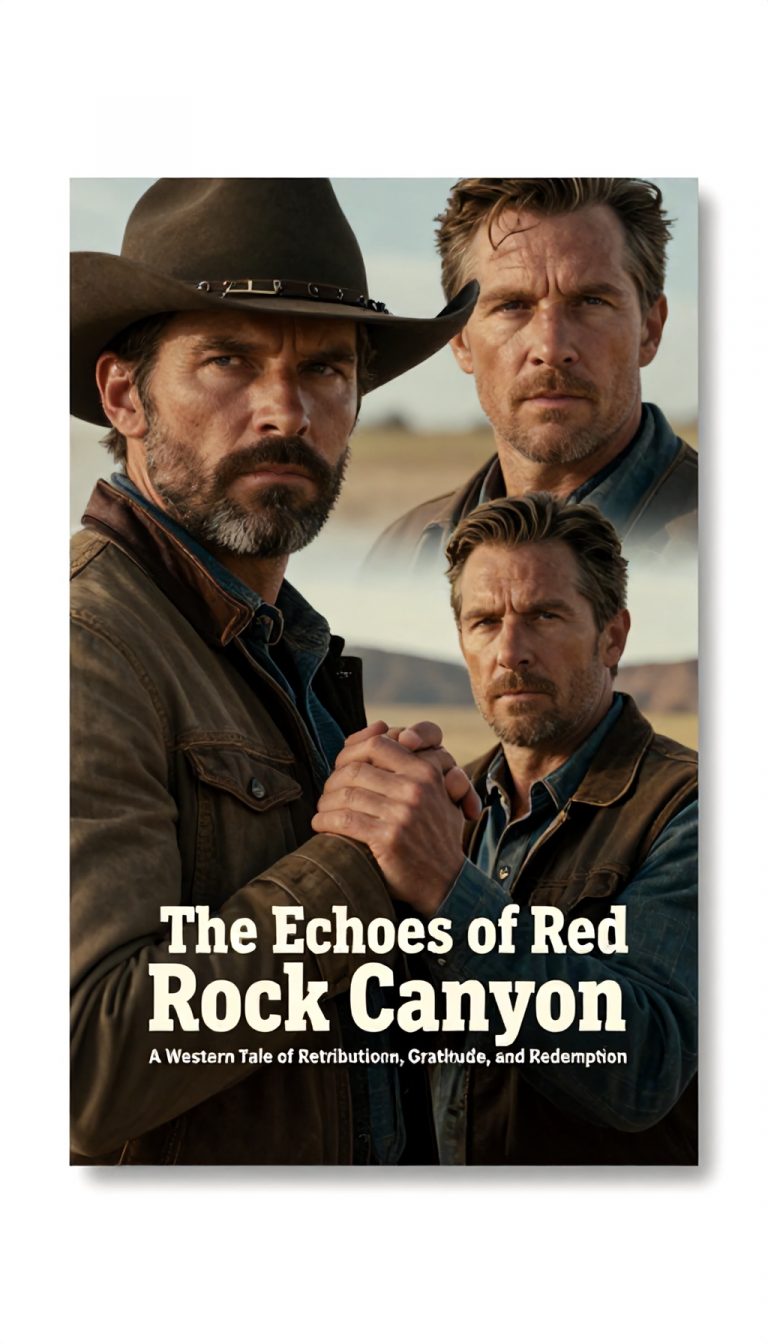
Chapter 7: WHAT LAY BENEATH THE HEARTH
They returned before sundown.
Gideon rode with them.
Nell remained with another family nearby.
Nobody said much along the way.
Inside the ranch house, Gideon walked toward the stone hearth.
Eli watched him carefully.
“This house did not exist in 1858.”
“No.”
“Then how could my father put something underneath it?”
“He didn’t.”
Eli waited.
Gideon pointed toward the floor.
“You built over the location.”
“What location?”
“The original survey marker.”
Eli glanced at Chaska.
She looked just as surprised.
Gideon knelt beside the hearth.
“The large red foundation stone.”
Eli knew exactly which one he meant.
It was larger than the surrounding rocks. Eli had uncovered it years earlier while clearing the site. Rather than move it, he had incorporated the stone into the hearth.
Gideon gave a sad smile.
“Samuel used to say you had your mother’s instincts.”
Eli looked sharply at him.
“What does that mean?”
“Later.”
“No.”
Eli’s voice hardened.
“No more later.”
Gideon sighed.
“Then help me move the stove.”
Together they shifted it away.
Heat spilled into the room.
Gideon brushed ash and debris from the stones below.
He found an iron ring embedded between them.
Eli had never seen it.
They pulled.
Part of the floor lifted.
Cold air emerged from a cavity below.
A metal box rested inside.
Eli stared at it.
For years he had slept only a few yards away.
Gideon produced a key.
Eli looked at him.
“You kept that for twenty-one years?”
“Yes.”
“And never said anything.”
“Every year I hated carrying it more.”
Eli took the key.
The lock opened.
Inside the box lay oilcloth-wrapped papers.
Bundles of letters.
A leather journal.
The missing half of the silver seal.
And an old photograph.
Eli lifted the photograph first.
A younger Samuel Mercer stood beside four men.
One was Gideon.
One appeared Mexican.
Two appeared Apache.
Behind the men stood a woman.
Eli knew her face instantly.
His mother.
Anna Mercer.
Except the handwritten name below the picture did not say Anna.
It said:
Aiyana.
Eli looked at Gideon.
“No.”
Gideon’s eyes filled with tears.
“Your mother was born among the northern Apache.”
Eli felt his legs weaken.
“She was Apache?”
“Yes.”
He looked at Chaska.
She had become completely still.
“You knew?”
“No.”
Serina moved closer.
She looked at the photograph.
Then inhaled.
“I know that design.”
Eli turned.
“What design?”
Serina indicated the beadwork on his mother’s clothing.
“That pattern belonged to my grandmother’s family.”
Chaska came beside her.
Waya leaned over the table.
Chaska whispered something in Apache.
Serina’s eyes widened.
Eli’s heart hammered.
“What?”
Chaska looked at him.
“My mother used to tell me about a woman who left the mountains with a translator.”
Eli could barely speak.
“My mother?”
“She said that woman had a son.”
Eli lowered himself into a chair.
Everything he believed about himself was changing at once.
His mother’s black hair.
Her songs.
The strange words she whispered when she believed he was asleep.
All his life Eli had assumed the language was Spanish.
It had not been.
Gideon lifted one stack of documents.
“Samuel and Aiyana tried to create a life between communities. It was far harder than either expected.”
Eli continued staring at the photograph.
“Why did nobody tell me?”
“After she died, Samuel believed your connection to the trust made you vulnerable. He altered records. He let people believe she came from Missouri. He made me promise to keep the truth hidden.”
“By lying to me.”
“Yes.”
“Everybody kept me safe with lies.”
No one answered.
Eli opened Samuel’s journal.
The earliest pages described surveys.
Meetings.
Arguments.
Plans for shared water.
The creation of the trust.
One name appeared repeatedly.
Elias Voss.
Voss wanted complete control of the spring.
He offered money.
When money failed, he used pressure.
When pressure failed, threats followed.
Samuel wrote everything down.
One entry was underlined twice.
August 16, 1858.
Elias knows where the primary documents are. Aiyana believes we must divide them. I agree. If anything happens, Gideon takes Eli. The northern families take one half of the seal. I will move the witness ledger.
Two days afterward, Samuel had been shot.
Eli turned pages faster.
Months later the journal began again, the handwriting heavier and less steady.
Samuel survived.
He was hiding.
Again and again he wrote about Eli.
My boy will believe I abandoned him.
Gideon says staying away is the only way to protect him.
I dream of walking into town, finding my son, and taking him home.
If I do, Voss will follow me straight to him.
Eli stopped.
His eyes blurred.
He shut the journal.
At thirty-three, he had not cried since he was fourteen.
He hated discovering that his body had not forgotten how.
Chaska placed a hand gently against his shoulder.
He allowed it to remain there.
Gideon put another packet on the table.
“His last letter.”
Eli stared at the envelope.
His name was written across the front in Samuel’s hand.
For Eli, when silence becomes more dangerous than truth.
He opened it.
My son,
If you are reading this, then Gideon has decided hiding you no longer protects you.
There are things you may hate me for.
You have the right.
But understand one thing: I did not stay away because I loved you too little. I stayed away because men were willing to use you to reach something your mother and I swore to defend.
The water does not belong to us.
The land does not belong to us in the way powerful men imagine one hand can possess land forever.
We were only keepers.
If the trust is to survive, one final condition must be met.
The Mercer representative must willingly join the northern families again.
Not through blood.
Not merely through inheritance.
Through choice.
A duty forced onto a child is not a true trust.
You must choose them.
And they must choose you.
Eli stopped reading.
His eyes moved toward Chaska.
Her face had gone pale.
“You did not know?”
“No.”
He continued.
The agreement was designed this way because ownership means nothing without consent. If Elias Voss, or any man like him, ever collects the surrounding deeds, the trust can still be restored if the Mercer keeper and three descendants of the original northern signatories bring both halves of the seal before a territorial judge.
Three descendants.
Eli slowly raised his head.
Chaska.
Waya.
Serina.
Nobody spoke.
Serina whispered.
“Our grandfathers.”
Gideon nodded.
“All three were signatories.”
Chaska stared.
“You knew who we were?”
“Not until today.”
“Samuel?”
“He knew the families. He could not have known which descendants would one day carry the claim.”
Eli returned to the letter.
Another paragraph remained.
And if my son ever stands willingly beside them, tell him what I was too frightened to write sooner:
The deed to his property is not the heart of the valley.
The water is.
The entrance to the spring lies beneath the house he has not yet built.
Eli stopped.
Everyone looked downward.
Beneath the floor.
Gideon laughed once, though sadness filled the sound.
“Samuel apparently knew you better than we did.”
Eli stared.
“He could not have known where I would build a house.”
Gideon looked at Aiyana’s photograph.
“Your mother did.”
“What?”
“She brought you to this place once when you were six. You do not remember?”
Eli shook his head.
“She told Samuel that if you ever stopped moving, it would be somewhere near these cottonwoods.”
The words hurt in a way he could not explain.
The place Eli believed he had chosen accidentally.
The foundation stone.
The land he had nearly sold that morning.
Perhaps none of it had been entirely accidental.
Or perhaps all of it had.
That possibility felt even stranger.
Waya moved to the window.
She had been quiet too long.
Suddenly her body stiffened.
“Riders.”
Eli looked up.
“How many?”
Waya watched the southern horizon.
“More than four.”
Gideon’s face lost color.
“Voss.”
“His employees?”
Waya shook her head.
“No.”
She turned from the glass.
“Voss himself.”
Comments (0)